

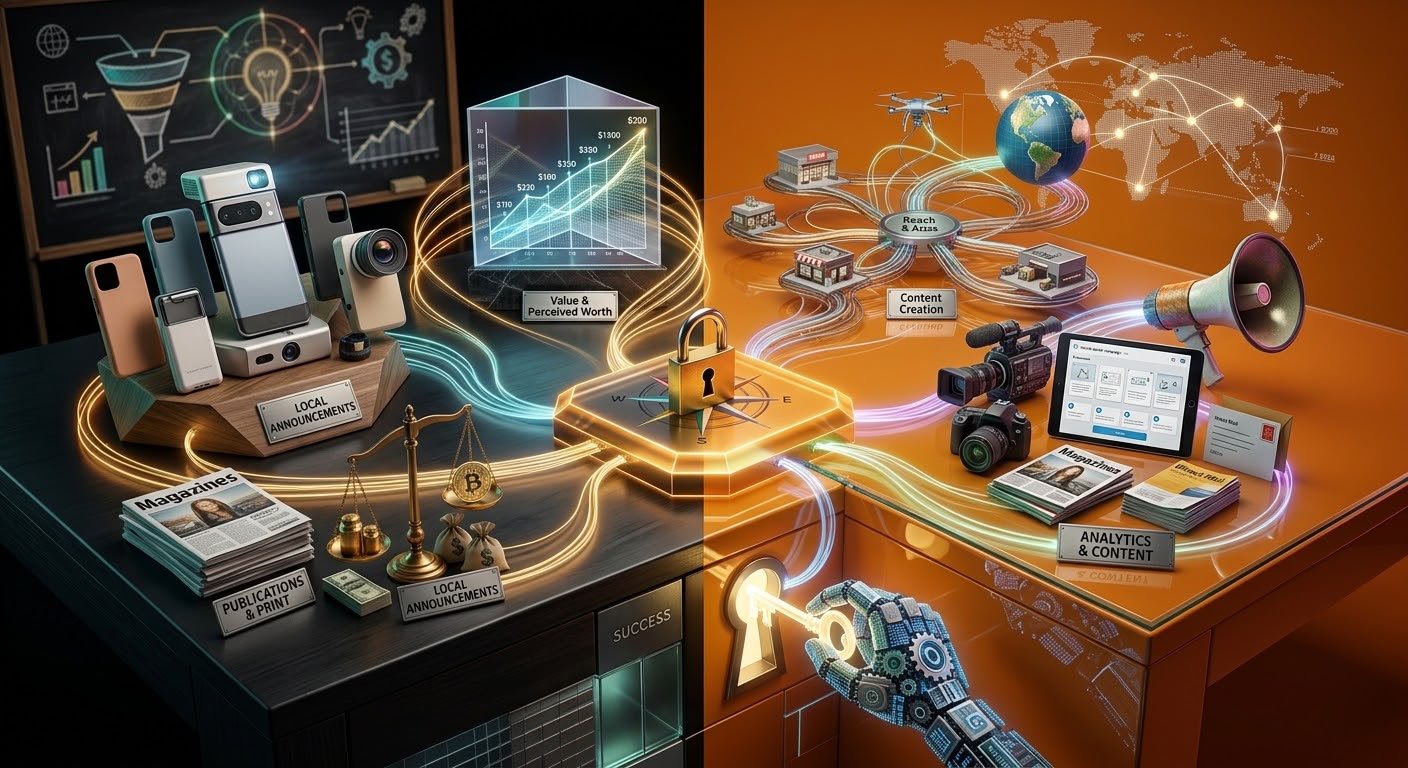
As a marketing student and digital marketer, I get asked one question a lot: “Should I focus on digital marketing or traditional marketing?” My honest answer is that it’s the wrong question. The right one is: what is the right mix?
That’s what the marketing mix is about.
What Is the Marketing Mix?
The marketing mix is the set of tools a business combines to reach its customers and achieve its goals. The classic framework is the 4Ps of marketing:
- Product: what you offer, and the problem it solves.
- Price: what customers pay, and what that price says about your value.
- Place: where and how customers can buy it.
- Promotion: how you communicate with your audience.
For service businesses, the model extends to the 7Ps of marketing, adding People, Process, and Physical Evidence (the tangible signs of quality, like a website, a shop’s interior, or customer reviews).
The key idea is that these elements work together. A great product with poor pricing struggles. A brilliant campaign for a product nobody can find is wasted money. A strong marketing mix strategy makes every “P” support the others.
Where Digital and Traditional Marketing Fit
Promotion is where most people think about the digital versus traditional debate, but both sit inside the mix.
Digital marketing includes SEO, social media, email, content marketing, and paid ads. Its strengths are measurable results, precise targeting, and a lower cost of entry.
Traditional marketing includes print, radio, TV, billboards, events, and word of mouth. Its strengths are local visibility, trust, and reaching people who aren’t always online.
Neither is automatically better. A neighborhood bakery might get more from a well-placed banner and a Google Business Profile than from a big social media budget. An online store might do the opposite. The best approach is integrated marketing, where every channel tells the same story and supports the others.
How to Build Your Own Marketing Mix
Here’s a simple process you can follow:
- Know your audience. Who are they, where do they spend time, and what do they care about?
- Define your goal. Awareness, leads, sales, and loyalty each call for different tactics.
- Review each P. Ask whether your product, price, place, and promotion send a consistent message.
- Choose your channels. Pick the ones your audience actually uses, not every channel available.
- Measure and adjust. Track results and shift your budget toward what works.
A Quick Example
Imagine a small local café launching a new menu.
- Product: a seasonal drink range.
- Price: priced slightly above average to signal quality.
- Place: in-store, plus delivery apps.
- Promotion: Instagram photos and short videos (digital), a sidewalk sign and printed flyers (traditional), and a loyalty card to encourage repeat visits.
Each choice supports the same brand message, and that consistency is what makes the mix work.
Final Thoughts
The marketing mix isn’t an old textbook idea. It’s a practical tool I use whenever I plan a campaign, whether it’s a social media plan or a full brand launch. Digital tools give us speed and data, traditional tools give us reach and trust, and the marketing mix helps us combine them wisely.As a marketing student and digital marketer, I get asked one question a lot: “Should I focus on digital marketing or traditional marketing?” My honest answer is that it’s the wrong question. The right one is: what is the right mix?
That’s what the marketing mix is about.
What Is the Marketing Mix?
The marketing mix is the set of tools a business combines to reach its customers and achieve its goals. The classic framework is the 4Ps of marketing:
- Product: what you offer, and the problem it solves.
- Price: what customers pay, and what that price says about your value.
- Place: where and how customers can buy it.
- Promotion: how you communicate with your audience.
For service businesses, the model extends to the 7Ps of marketing, adding People, Process, and Physical Evidence (the tangible signs of quality, like a website, a shop’s interior, or customer reviews).
The key idea is that these elements work together. A great product with poor pricing struggles. A brilliant campaign for a product nobody can find is wasted money. A strong marketing mix strategy makes every “P” support the others.
Where Digital and Traditional Marketing Fit
Promotion is where most people think about the digital versus traditional debate, but both sit inside the mix.
Digital marketing includes SEO, social media, email, content marketing, and paid ads. Its strengths are measurable results, precise targeting, and a lower cost of entry.
Traditional marketing includes print, radio, TV, billboards, events, and word of mouth. Its strengths are local visibility, trust, and reaching people who aren’t always online.
Neither is automatically better. A neighborhood bakery might get more from a well-placed banner and a Google Business Profile than from a big social media budget. An online store might do the opposite. The best approach is integrated marketing, where every channel tells the same story and supports the others.
How to Build Your Own Marketing Mix
Here’s a simple process you can follow:
- Know your audience. Who are they, where do they spend time, and what do they care about?
- Define your goal. Awareness, leads, sales, and loyalty each call for different tactics.
- Review each P. Ask whether your product, price, place, and promotion send a consistent message.
- Choose your channels. Pick the ones your audience actually uses, not every channel available.
- Measure and adjust. Track results and shift your budget toward what works.
A Quick Example
Imagine a small local café launching a new menu.
- Product: a seasonal drink range.
- Price: priced slightly above average to signal quality.
- Place: in-store, plus delivery apps.
- Promotion: Instagram photos and short videos (digital), a sidewalk sign and printed flyers (traditional), and a loyalty card to encourage repeat visits.
Each choice supports the same brand message, and that consistency is what makes the mix work.
Final Thoughts
The marketing mix isn’t an old textbook idea. It’s a practical tool I use whenever I plan a campaign, whether it’s a social media plan or a full brand launch. Digital tools give us speed and data, traditional tools give us reach and trust, and the marketing mix helps us combine them wisely.